
The Last Layer
On smalls, and the objects you happened upon.

There is a moment in any room, after the furniture is placed and the larger decisions have settled, when something is still asking to be found. The proportions are right. The light works. The palette holds together. And yet the room sits at a slight remove, present but not yet inhabited, like a conversation that is warm but hasn't found its footing. What it needs is almost never more. It is something smaller, something that belongs to an entirely different order of decision.
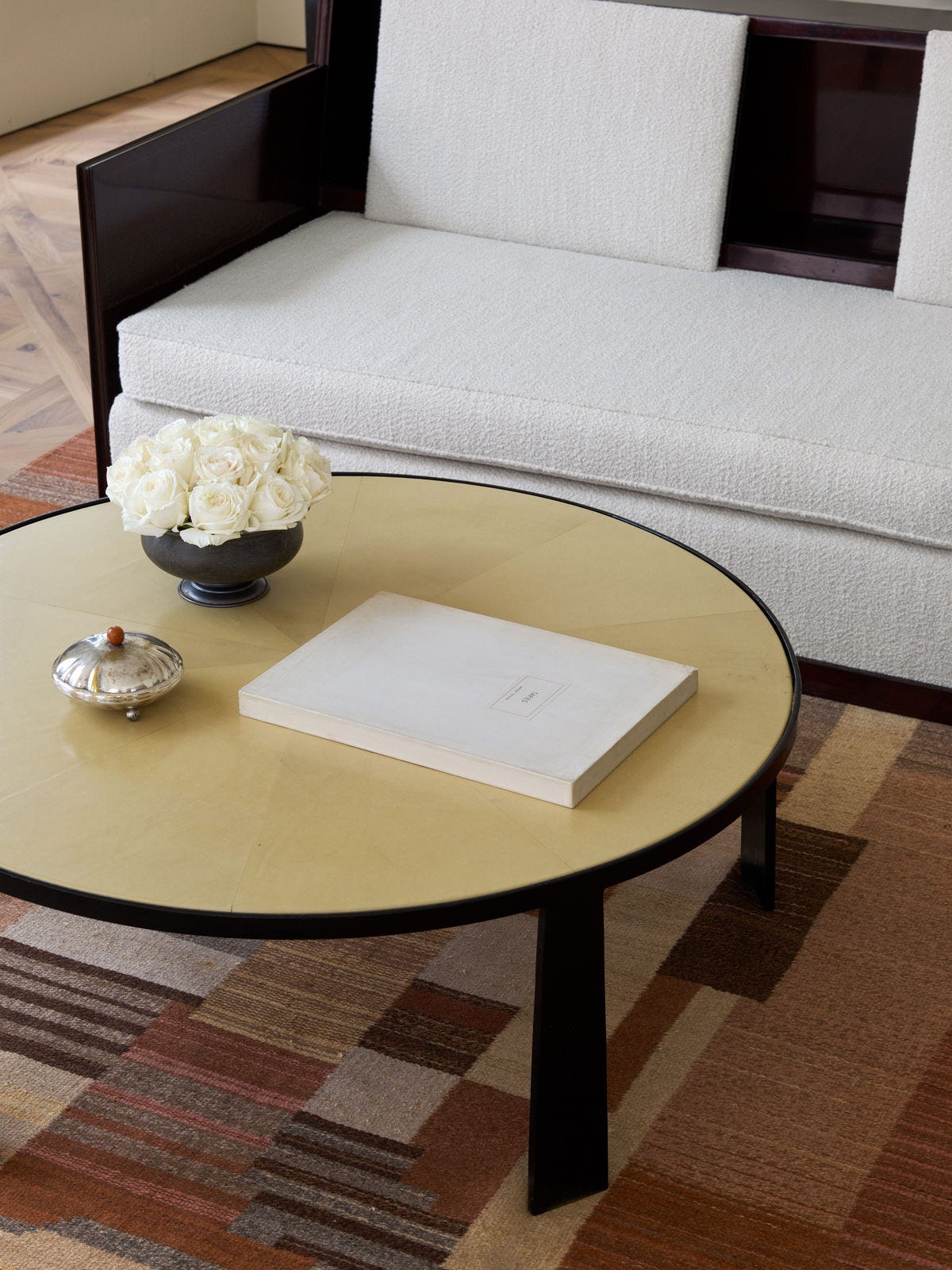
Designers call them smalls. The stone picked up somewhere and set on a shelf without ceremony. The small brass object whose original purpose you’ve long forgotten. The primitive wooden vessel, dull and heavy and obviously old. Taken individually, none of them read as design decisions. Collectively, they are the room’s handwriting.
The distinction that matters most is the one between objects that were purchased to fill a space and objects that arrived by other means. A piece of stoneware thrown by a specific pair of hands in a specific place carries something that a piece sourced to complete a vignette does not. It isn’t preciousness. It is presence. You feel it when you walk into a room and something draws your eye to a shelf without announcement, without arrangement, without asking to be noticed. That quality of attention is almost impossible to manufacture.
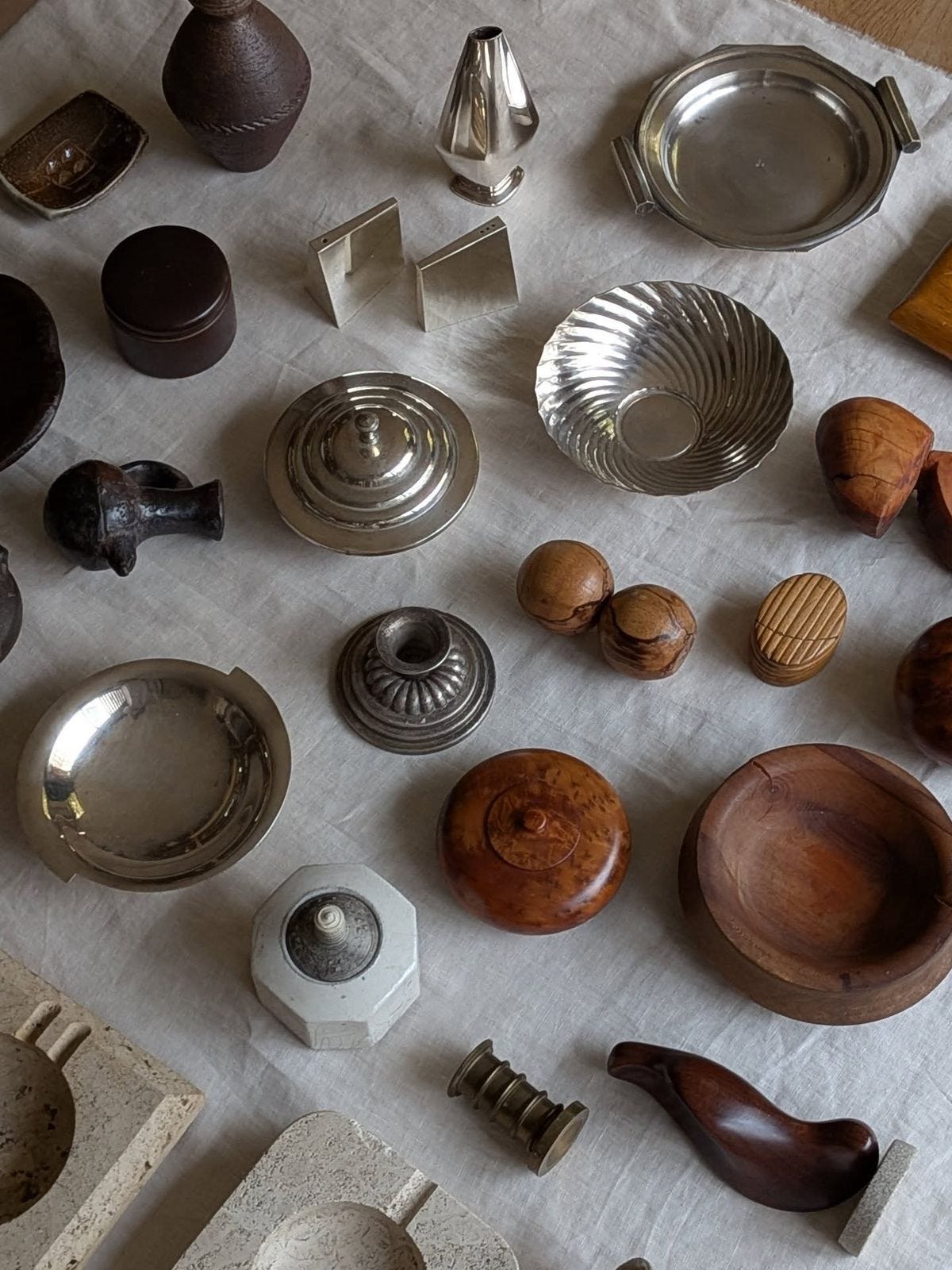
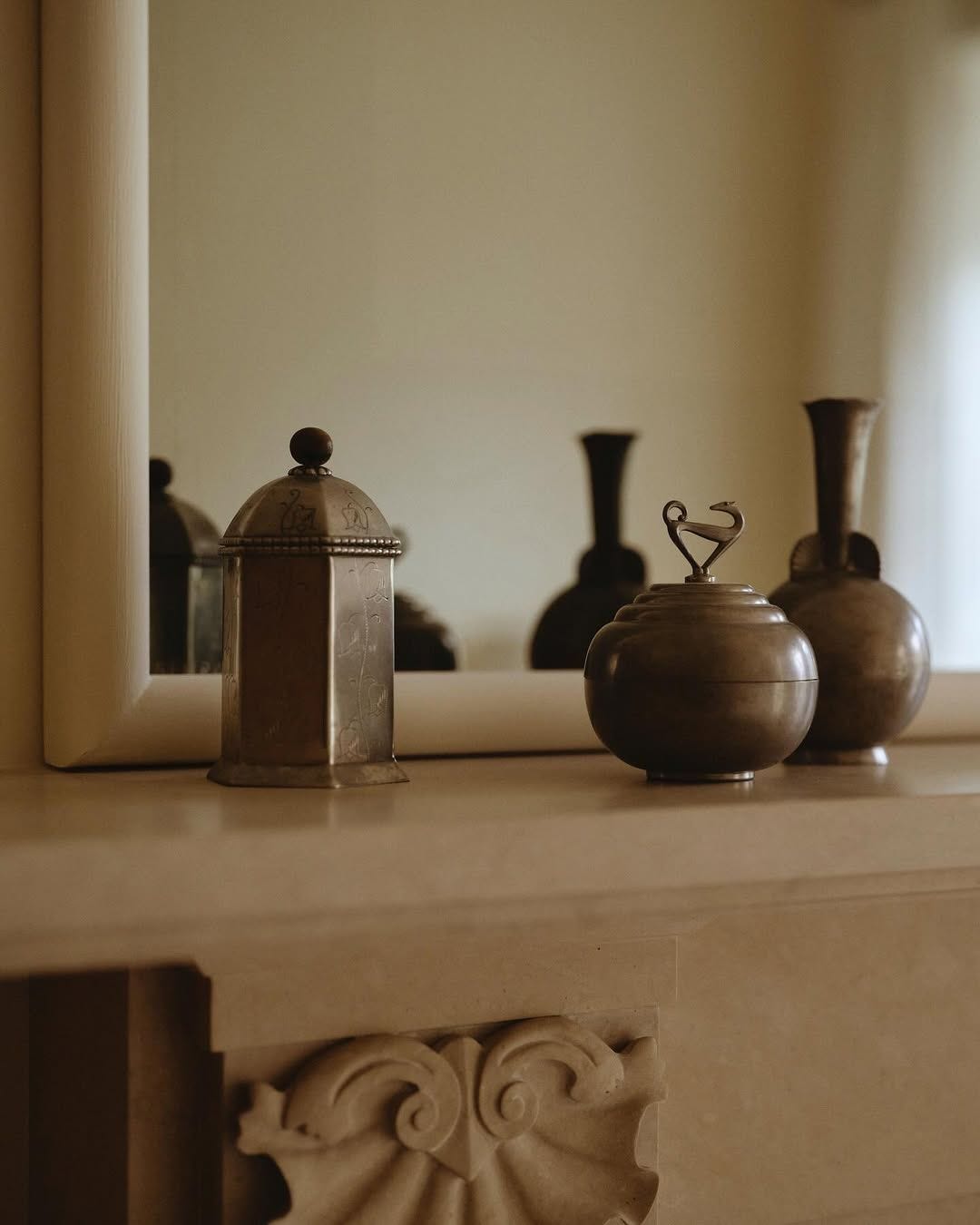
Antique markets are where this starts to make sense. A small carved teak object, the use of which is ambiguous, the age of which is legible in how it has worn. A Japanese ceramic that has been handled so many times the glaze has softened at the rim. A pewter vessel, its surface the colour of winter light, that has accumulated more history than we will ever know the details of. These are objects that have already lived somewhere, already meant something to someone, already accumulated time. When they arrive in a new room they bring that weight with them quietly. They do not shout about it. That is exactly the point.
There is a before and after that most rooms move through. Before the smalls, the room is correct. After, it is inhabited. The difference is not visual so much as it is felt, the way you feel it when someone has just left a room, something of them still present in the arrangement of objects on the table. Smalls carry that quality of evidence. They say: someone lives here, and they have been paying attention.
The difficulty is that this layer cannot be approached with a list. You cannot decide in advance what a room needs in the way you decide on a sofa or a rug. The objects find you. A piece of sea glass. A small framed drawing bought at a graduate show. A dish brought back from somewhere and used every day until it became invisible. The best smalls are the ones that arrived without occasion and stayed without explanation, the ones you happened upon rather than sought.
What they share, the objects that work and the ones that don’t, is not style or material or period. It is a quality of specificity. An object that feels chosen for no one in particular belongs to no one. An object with a story it doesn’t tell, that carries its origin quietly, that is obviously not there by accident, settles into a room in a way that makes everything around it feel more resolved.
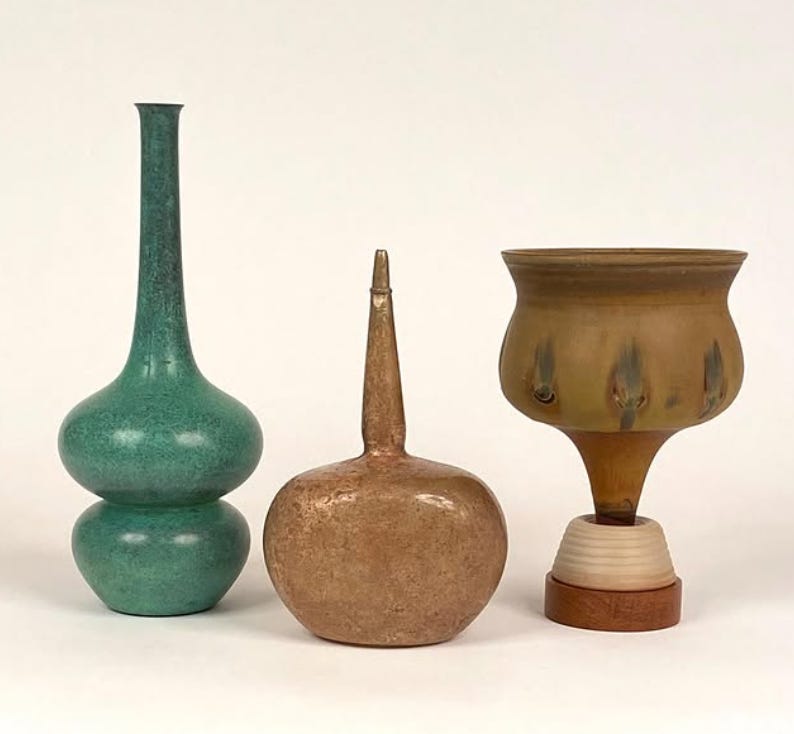
The room becomes a self-portrait that way. Not the furniture, not the paint, but the small accumulated evidence of a life that has been lived with some degree of attention to what it lets close.
Designer Alyssa Kapito, Photographer Unknown
Eesome Shop
Town House of Yael Aflalo & Ludvig Frössén: Designer Studio Festen, Styling Colin King, Photography Adrian Gaut
Brian Roark, Object Los Angeles